
How to Tell if an Adjustable Bed Motor Is Bad
When one section of an adjustable bed will not move, it is easy to assume the motor is bad. But a loose cable, blocked frame, remote issue, or control-box problem can cause the same symptom. The best way to tell is to check what the bed does—and what it does not do—before replacing any parts.
Quick Answer
An adjustable bed motor may be bad if the base has power, the remote works, the motor cable is secure, and that section still will not move. Clicking, humming, or grinding without movement can also point to a failing motor. Check the connection and reset the base first, because the motor is not always the actual problem.
Signs an Adjustable Bed Motor May Be Bad
A failing motor often affects only one part of the adjustable base. Watch for these signs:
- The head or foot section does not move, but the other section still works.
- You hear a hum, click, buzz, or grinding sound when you press the button.
- The motor tries to move but stops immediately or moves only a little.
- The remote lights up and the base has power, but one bed position will not respond.
- The motor connection is secure and nothing is blocking the frame.
- The same section still will not move after a full power reset.
How to Check Whether the Motor Is the Problem
Test the head and foot controls separately. If one section works but the other does not, the issue is more likely with the non-working motor, its cable, or its control-box port than with the entire base.
Look underneath and around the base for storage bins, bedding, cords, furniture, or anything caught in the moving frame. A blocked base can make a working motor sound like it has failed.
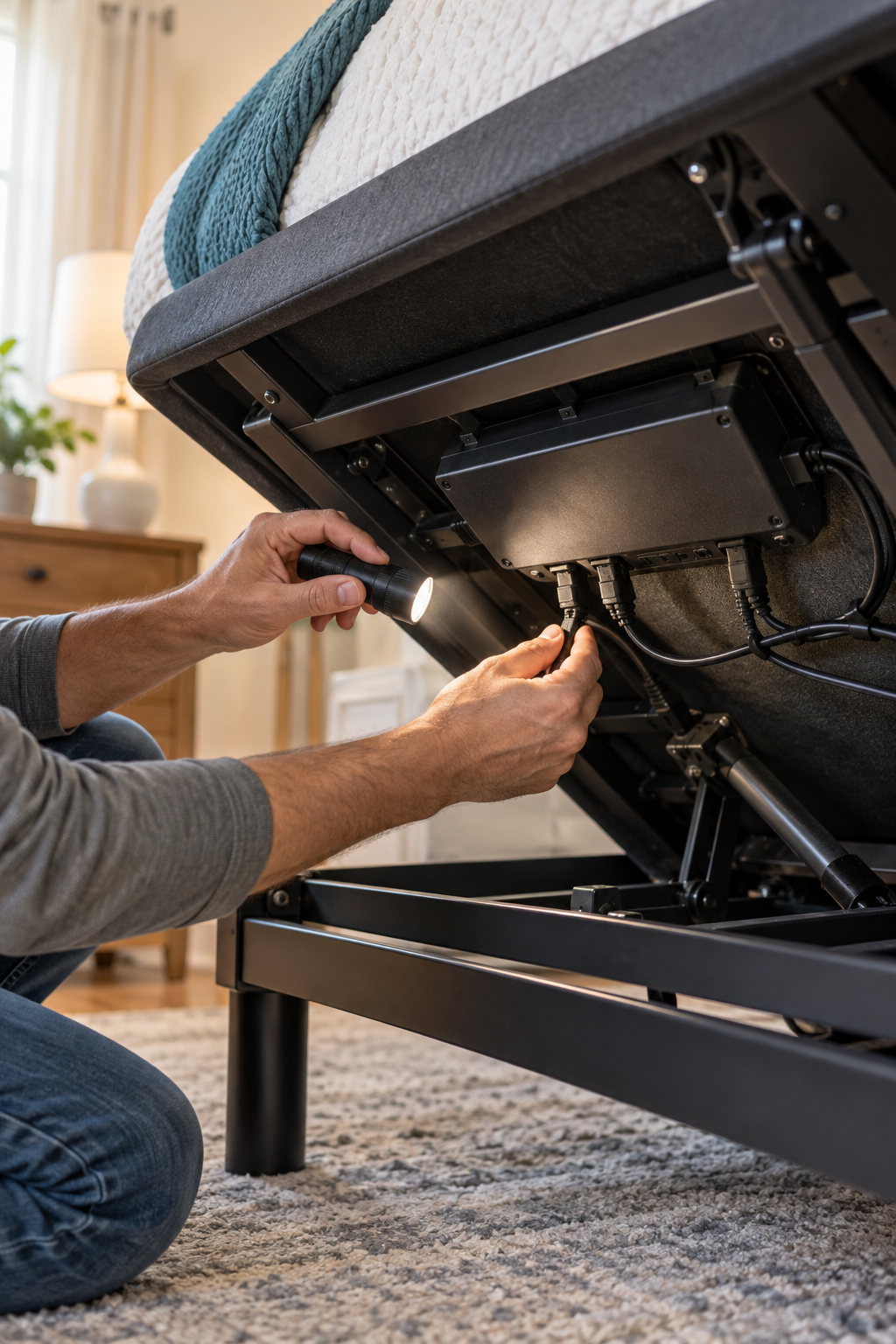
Disconnect the base from the wall. Follow the motor wire back to the control box and press the plug firmly into place. Check for a cable that is pinched, pulled tight, or visibly damaged.
Leave the base unplugged for about 60 seconds. Reconnect it, wait briefly, and test the non-working section again. A reset can clear a temporary control-box or communication problem.
A quiet hum or clicking sound can mean the motor is getting a command but cannot move the frame. No sound at all can point to a loose cable, control-box issue, or remote problem instead.
A motor that moves slowly, stops before reaching its normal position, makes grinding sounds, or works only sometimes may be wearing out. Stop using the base if movement looks uneven or sounds harsh.
Do not push, pull, or sit on the raised section to make it move. That can damage the motor, actuator, brackets, or frame and make the repair more expensive.
Before You Replace the Motor
Adjustable-bed motors are not universal. Before ordering one, find the label on the existing motor and write down the part number, base brand, model number, cable connection style, and mounting details. A motor that looks similar may not work with your control box or frame.
When a Motor Is More Likely to Be Bad
The motor is more likely the problem when these checks are all true:
- The base has power and the remote is working correctly.
- The motor cable is securely connected and not damaged.
- Nothing is blocking the moving frame.
- The other section of the bed works normally.
- The non-working motor hums, clicks, grinds, or does not move after a reset.
- The base is out of warranty or the manufacturer confirms the motor is the failed part.
Find Your Brand’s Instructions
Motor troubleshooting and replacement procedures vary by adjustable-base brand and model. Use the official support information for your exact bed before disconnecting the motor or ordering a replacement.